
Deutsch: Skymaster (Raumfahrt) / Español: Skymaster (industria espacial) / Português: Skymaster (indústria espacial) / Français: Skymaster (industrie spatiale) / Italiano: Skymaster (industria spaziale)
The term Skymaster in the space industry refers to a specialized class of high-altitude, long-endurance aircraft or unmanned aerial systems (UAS) designed to serve as stratospheric platforms for scientific, telecommunications, or Earth observation missions. These systems bridge the gap between conventional aircraft and satellites, offering persistent coverage with lower operational costs and greater flexibility than orbital assets. While not a standardized designation, the Skymaster concept has been explored by aerospace agencies and private companies to address niche requirements in atmospheric research, disaster monitoring, and global connectivity.
General Description
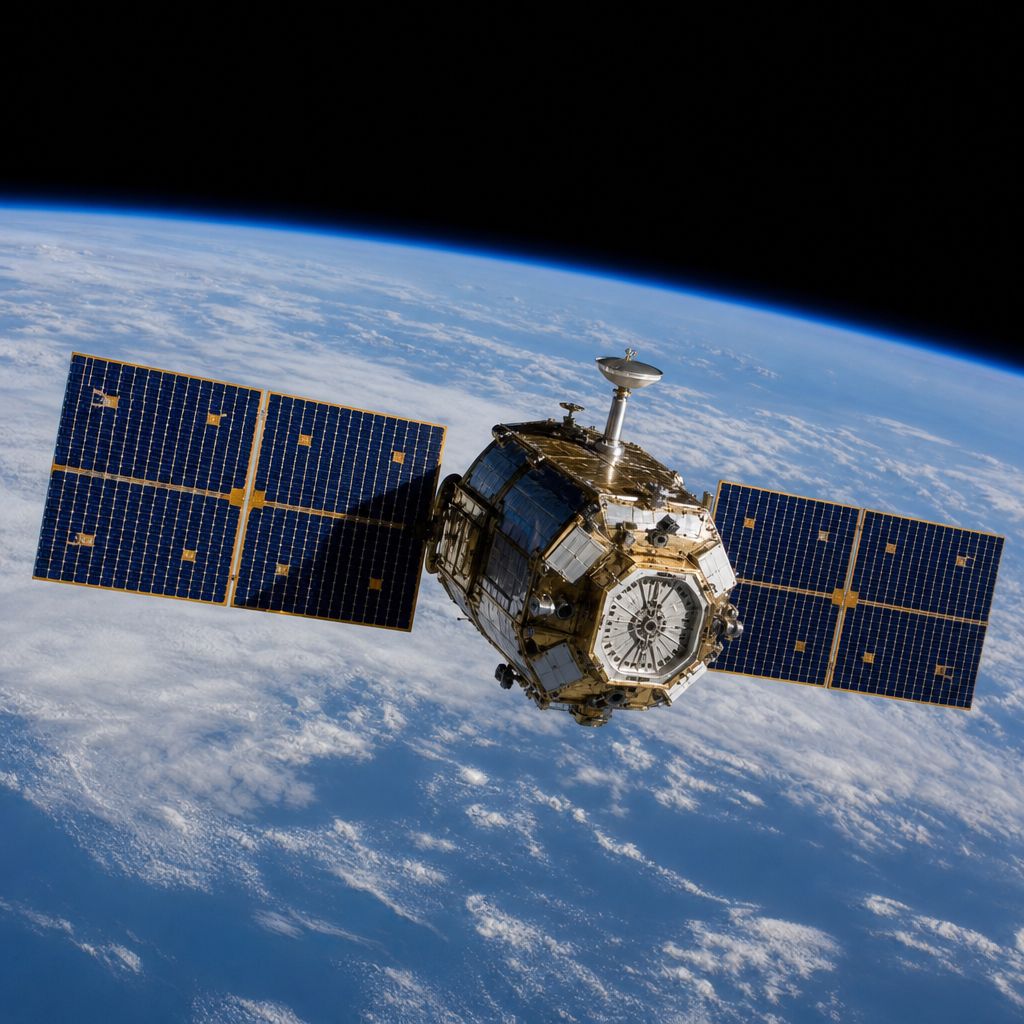
The Skymaster represents an evolution in aerospace engineering, combining the endurance of satellites with the reusability and adaptability of aircraft. Unlike traditional satellites, which operate in fixed orbits and require costly launches, Skymaster platforms are designed to loiter in the stratosphere—typically at altitudes between 18,000 and 24,000 meters—for extended periods, often measured in weeks or months. This operational envelope allows them to perform functions such as high-resolution imaging, atmospheric data collection, or signal relay with minimal latency compared to geostationary satellites.
The design philosophy behind Skymaster systems prioritizes lightweight construction, energy efficiency, and autonomous operation. Many prototypes leverage solar power to sustain flight, utilizing advanced photovoltaic cells and energy storage systems to maintain altitude during nighttime operations. The airframes are often constructed from composite materials to reduce weight while maintaining structural integrity under the low-pressure conditions of the stratosphere. Propulsion systems vary, with some designs employing electric motors powered by solar arrays, while others use hybrid-electric or hydrogen fuel cell technologies to extend endurance.
Skymaster platforms are distinct from other high-altitude vehicles, such as high-altitude pseudo-satellites (HAPS), primarily in their mission profile and scalability. While HAPS are often optimized for telecommunications or surveillance, Skymaster systems are frequently tailored for scientific payloads, such as atmospheric sensors, telescopes, or climate monitoring instruments. Their ability to carry modular payloads makes them particularly valuable for research institutions and space agencies that require flexible, on-demand access to the stratosphere without the logistical constraints of orbital launches.
Technical Specifications and Design Considerations
Skymaster systems are engineered to operate in the stratosphere, where environmental conditions pose unique challenges. At altitudes above 18,000 meters, air density is less than 10% of that at sea level, necessitating large wingspans—often exceeding 50 meters—to generate sufficient lift. The low Reynolds numbers in this regime require specialized airfoil designs to minimize drag and prevent stall. Additionally, temperature fluctuations between -60°C and -80°C demand robust thermal management systems to protect sensitive electronics and payloads.
Power generation is a critical aspect of Skymaster design. Solar-powered variants typically employ thin-film photovoltaic cells integrated into the wings or fuselage, with energy stored in lithium-sulfur or lithium-ion batteries for nighttime operation. Some experimental designs have explored hydrogen fuel cells as an alternative, offering higher energy density but introducing challenges in fuel storage and system complexity. The propulsion system must balance efficiency with reliability, as even minor failures can result in uncontrolled descent or mission termination.
Payload capacity is another defining characteristic. Skymaster platforms are designed to accommodate scientific instruments, communication relays, or remote sensing equipment, with typical payload masses ranging from 50 to 500 kilograms. The integration of these payloads requires careful consideration of center-of-gravity management, power distribution, and data transmission capabilities. Many Skymaster systems incorporate satellite communication links to relay data to ground stations in real time, though some missions may rely on onboard storage for later retrieval.
Autonomy is a key feature of Skymaster systems, as their long-duration missions preclude continuous human oversight. Advanced flight control systems, often incorporating artificial intelligence (AI) for path optimization and obstacle avoidance, enable these platforms to adapt to changing atmospheric conditions. Redundancy in critical systems, such as propulsion and navigation, is essential to mitigate the risk of catastrophic failure during extended flights.
Historical Development and Key Programs
The concept of stratospheric platforms dates back to the mid-20th century, with early experiments focusing on manned aircraft capable of sustained high-altitude flight. The U-2 spy plane, developed by Lockheed in the 1950s, demonstrated the feasibility of operating at altitudes above 20,000 meters, though its endurance was limited by fuel capacity and pilot fatigue. The advent of unmanned aerial vehicles (UAVs) in the 1990s revitalized interest in stratospheric platforms, with programs such as NASA's Helios Prototype and the European Space Agency's (ESA) HAPS initiatives laying the groundwork for modern Skymaster systems.
The Helios Prototype, developed by AeroVironment under NASA's Environmental Research Aircraft and Sensor Technology (ERAST) program, was a pioneering effort in solar-powered high-altitude flight. In 2001, the Helios set a world record by reaching an altitude of 29,524 meters, though it was later lost in a structural failure during a test flight. This program demonstrated the potential of solar-powered stratospheric platforms but also highlighted the technical challenges, particularly in structural integrity and energy management.
More recent developments have focused on commercial applications. Companies such as Airbus, with its Zephyr program, and Facebook's now-defunct Aquila project, have explored Skymaster-like platforms for telecommunications and internet connectivity. The Airbus Zephyr, for example, holds the world record for the longest continuous flight by an unmanned aircraft, with a 25-day mission in 2018. These programs have driven advancements in lightweight materials, energy storage, and autonomous flight systems, bringing Skymaster technology closer to operational maturity.
Government agencies have also played a significant role in advancing Skymaster technology. The Defense Advanced Research Projects Agency (DARPA) in the United States has funded programs such as the Vulture, which aimed to develop a UAV capable of five years of continuous flight. While the Vulture program was ultimately canceled, it contributed to the development of critical technologies, including advanced energy storage and autonomous flight control systems. Similarly, the Japan Aerospace Exploration Agency (JAXA) has explored stratospheric platforms for disaster monitoring and atmospheric research, with projects like the Stratospheric Airship demonstrating the feasibility of lighter-than-air Skymaster concepts.
Application Area
- Atmospheric and Climate Research: Skymaster platforms are ideal for long-term atmospheric monitoring, enabling the collection of data on greenhouse gases, ozone depletion, and aerosol concentrations. Their ability to loiter over specific regions for extended periods allows researchers to study dynamic atmospheric processes, such as the formation of polar stratospheric clouds or the transport of pollutants across continents. Instruments such as lidar (light detection and ranging) and spectrometers can be deployed to measure vertical profiles of temperature, humidity, and trace gases with high temporal resolution.
- Earth Observation and Disaster Monitoring: Equipped with high-resolution cameras or synthetic aperture radar (SAR), Skymaster systems can provide real-time imagery for disaster response, agricultural monitoring, and environmental surveillance. Their stratospheric vantage point offers a balance between the wide-area coverage of satellites and the high-resolution capabilities of low-altitude aircraft. During natural disasters, such as wildfires or hurricanes, Skymaster platforms can be rapidly deployed to affected regions, providing critical data to emergency responders without the latency associated with satellite revisit times.
- Telecommunications and Connectivity: Skymaster platforms can serve as stratospheric relays for telecommunications, offering low-latency connectivity to remote or underserved regions. Unlike geostationary satellites, which suffer from signal delay due to their high altitude, Skymaster systems can provide broadband or 5G connectivity with minimal latency. This application is particularly valuable for bridging the digital divide in rural areas or providing temporary communication infrastructure during emergencies. Companies such as Airbus and HAPSMobile have explored this use case, with the latter successfully demonstrating 4G LTE connectivity from the stratosphere in 2020.
- Space Science and Astronomy: The stratosphere offers a unique environment for astronomical observations, free from the distortions caused by Earth's lower atmosphere. Skymaster platforms can carry telescopes or other optical instruments to study celestial objects with greater clarity than ground-based observatories. For example, the Stratospheric Observatory for Infrared Astronomy (SOFIA), a joint project between NASA and the German Aerospace Center (DLR), uses a modified Boeing 747 to conduct infrared observations at altitudes above 12,000 meters. While not a Skymaster in the strictest sense, SOFIA demonstrates the potential of stratospheric platforms for space science.
- Defense and Surveillance: Military applications of Skymaster technology include intelligence, surveillance, and reconnaissance (ISR) missions. Their ability to loiter over areas of interest for extended periods makes them valuable for monitoring borders, tracking maritime activity, or providing real-time situational awareness during military operations. Unlike satellites, which follow predictable orbits, Skymaster platforms can be repositioned as needed, offering greater operational flexibility. The U.S. Department of Defense has expressed interest in stratospheric platforms for these purposes, with programs such as DARPA's ISIS (Integrated Sensor Is Structure) exploring the integration of radar and communication payloads on high-altitude airships.
Well Known Examples
- Airbus Zephyr: The Airbus Zephyr is a solar-powered, high-altitude pseudo-satellite (HAPS) that holds the world record for the longest continuous flight by an unmanned aircraft, with a 25-day mission in 2018. Designed for stratospheric operation, the Zephyr has a wingspan of 25 meters and can carry payloads of up to 25 kilograms. It has been used for applications ranging from telecommunications to Earth observation, with successful demonstrations of 4G LTE connectivity and high-resolution imaging. The Zephyr's endurance and versatility make it one of the most advanced Skymaster platforms currently in operation.
- NASA Helios Prototype: The Helios Prototype was a solar-powered UAV developed by AeroVironment under NASA's ERAST program. In 2001, it set a world altitude record for non-rocket-powered aircraft by reaching 29,524 meters. The Helios featured a wingspan of 75 meters and was designed to demonstrate the feasibility of long-duration, high-altitude flight using solar power. Although the program was discontinued following a structural failure in 2003, it provided valuable insights into the challenges of stratospheric flight and paved the way for subsequent Skymaster projects.
- Facebook Aquila: The Aquila was a solar-powered UAV developed by Facebook's Connectivity Lab to provide internet access to remote regions. With a wingspan of 42 meters and a weight of approximately 450 kilograms, the Aquila was designed to operate at altitudes between 18,000 and 27,000 meters for up to 90 days. The project successfully completed a test flight in 2016 but was discontinued in 2018 due to technical challenges and shifting priorities within Facebook. Despite its short lifespan, the Aquila demonstrated the potential of Skymaster platforms for global connectivity.
- Stratospheric Airship (JAXA): The Japan Aerospace Exploration Agency (JAXA) has explored the use of stratospheric airships as Skymaster platforms for disaster monitoring and atmospheric research. These lighter-than-air vehicles are designed to operate at altitudes of 20,000 meters for extended periods, carrying payloads such as cameras, radar, and atmospheric sensors. While still in the experimental phase, JAXA's stratospheric airship program highlights the diversity of Skymaster concepts, including both heavier-than-air and lighter-than-air designs.
Risks and Challenges
- Structural Integrity and Environmental Stress: Operating in the stratosphere exposes Skymaster platforms to extreme environmental conditions, including low temperatures, high ultraviolet (UV) radiation, and turbulent wind shear. These factors can degrade materials over time, leading to structural failures or reduced performance. For example, the Helios Prototype's loss in 2003 was attributed to structural failure caused by turbulence. Ensuring long-term durability requires the use of advanced composite materials and rigorous testing under simulated stratospheric conditions.
- Energy Management and Power Generation: Solar-powered Skymaster platforms rely on efficient energy capture and storage to sustain flight during nighttime operations. Cloud cover, seasonal variations in solar irradiance, and the limited surface area available for photovoltaic cells can constrain power generation. Additionally, battery degradation over time can reduce the platform's endurance, necessitating redundant power systems or alternative energy sources, such as hydrogen fuel cells. Balancing energy demands with payload requirements remains a significant challenge.
- Autonomy and Flight Control: The long-duration nature of Skymaster missions requires highly autonomous flight control systems capable of adapting to changing atmospheric conditions and avoiding obstacles such as other aircraft or weather systems. Failures in autonomy can result in mission termination or, in the worst case, uncontrolled descent. Developing reliable AI-driven flight control systems that can operate independently for weeks or months is a critical area of research.
- Regulatory and Airspace Integration: Skymaster platforms operate in a complex regulatory environment, as they must coexist with commercial air traffic, military operations, and other airspace users. National aviation authorities, such as the Federal Aviation Administration (FAA) in the United States or the European Union Aviation Safety Agency (EASA), have yet to establish comprehensive regulations for stratospheric UAVs. Issues such as collision avoidance, frequency allocation for communications, and liability in the event of an accident must be addressed to enable widespread deployment.
- Payload Limitations and Data Transmission: While Skymaster platforms offer greater flexibility than satellites, their payload capacity is limited by weight and power constraints. High-resolution sensors or communication relays may require significant power, reducing the platform's endurance or necessitating trade-offs in other systems. Additionally, transmitting large volumes of data from the stratosphere to ground stations can be challenging, particularly in remote regions with limited infrastructure. Solutions such as laser communication or satellite relays are being explored to address these limitations.
- Cost and Operational Complexity: Despite their potential cost advantages over satellites, Skymaster platforms still require significant investment in research, development, and testing. The operational complexity of maintaining and recovering these systems—particularly in the event of a failure—can drive up costs. For example, the recovery of a Skymaster platform from a remote or inaccessible location may require specialized equipment and personnel, adding to the overall expense of the mission.
Similar Terms
- High-Altitude Pseudo-Satellite (HAPS): HAPS refers to a broader category of stratospheric platforms designed to perform satellite-like functions, such as telecommunications or Earth observation, from altitudes between 18,000 and 24,000 meters. While Skymaster systems are a subset of HAPS, the term HAPS encompasses a wider range of technologies, including airships, balloons, and fixed-wing aircraft. The primary distinction lies in the mission profile, with Skymaster platforms often tailored for scientific or research applications.
- Stratospheric Balloon: Stratospheric balloons are lighter-than-air vehicles that operate at altitudes similar to Skymaster platforms but rely on buoyancy rather than aerodynamic lift. These balloons are often used for short-duration missions, such as atmospheric sampling or astronomy, and lack the endurance and maneuverability of Skymaster systems. However, they offer advantages in payload capacity and simplicity, making them a complementary technology for certain applications.
- Unmanned Aerial Vehicle (UAV): UAV is a general term for any aircraft operated without a human pilot on board. While Skymaster platforms are a type of UAV, the term UAV encompasses a wide range of vehicles, from small drones used for photography to military reconnaissance aircraft. The key difference is that Skymaster systems are specifically designed for stratospheric, long-endurance missions, whereas most UAVs operate at lower altitudes and for shorter durations.
- Geostationary Satellite: Geostationary satellites operate in a fixed orbit approximately 35,786 kilometers above Earth's equator, providing continuous coverage of a specific region. While they share some functional similarities with Skymaster platforms—such as telecommunications and Earth observation—their high altitude results in significant signal latency and lower resolution for imaging applications. Skymaster systems offer a middle ground, combining the persistence of satellites with the flexibility and lower latency of aircraft.
Summary
The Skymaster represents a transformative class of aerospace platforms that combine the endurance of satellites with the adaptability of aircraft, enabling persistent stratospheric operations for scientific, telecommunications, and Earth observation missions. By leveraging advancements in lightweight materials, energy storage, and autonomous flight control, these systems address critical gaps in current aerospace capabilities, particularly for applications requiring long-duration, high-altitude coverage. While challenges such as structural integrity, energy management, and regulatory hurdles persist, ongoing research and development—exemplified by programs like the Airbus Zephyr and NASA's Helios Prototype—demonstrate the growing maturity of Skymaster technology. As the space industry continues to explore innovative solutions for global connectivity, climate monitoring, and defense, Skymaster platforms are poised to play an increasingly vital role in bridging the divide between terrestrial and orbital assets.
--
Related Articles to the term 'Skymaster' | |
| 'HAPS' | ■■■■■■■ |
| A high altitude platform station (HAPS) is a type of aircraft or other platform that is designed to operate . . . Read More | |
| 'Stratofortress' | ■■■■■■■ |
| The term Stratofortress in the context of the space industry refers to a conceptual or experimental platform . . . Read More | |
| 'Geopotential' | ■■■■■■■ |
| The Geopotential is a fundamental concept in geophysics and space science, representing the gravitational . . . Read More | |
| 'vinylester' | ■■■■■■ |
| In the space industry, vinylester resins represent a critical class of thermosetting polymers that bridge . . . Read More | |
| 'Stratosphere' | ■■■■■■ |
| Stratosphere: The stratosphere is the second layer of the atmosphere of the Earth, located above the . . . Read More | |
| 'SatCen' | ■■■■■■ |
| SatCen: The term satcen refers to a specialized facility within the space industry dedicated to the coordination, . . . Read More | |
| 'Long-endurance' | ■■■■■■ |
| Long-endurance in the Space industry context refers to the capability of spacecraft, satellites, or space . . . Read More | |
| 'Aerostat' | ■■■■■■ |
| Aerostat: An aerostat is a lighter-than-air aircraft that achieves buoyancy through the use of a gas . . . Read More | |
| 'Sister' | ■■■■■■ |
| Sister in the space industry context generally refers to a \'sister satellite\' or \'sister mission\', . . . Read More | |
| 'Activity' at fitness-and-health-glossary.com | ■■■■■ |
| Activity: In the fitness context, \'activity\' refers to any physical movement or exercise that promotes . . . Read More | |
Do you have more interesting information, examples? Send us a new or updated description !
If you sent more than 600 words, which we can publish, we will -if you allow us - sign your article with your name!