
Deutsch: Yeager / Español: Yeager / Português: Yeager / Français: Yeager / Italiano: Yeager
In the context of the space industry, Yeager refers to a specific type of advanced propulsion system designed to enhance the efficiency and performance of spacecraft. This technology is pivotal in modern aerospace engineering, particularly in missions requiring high thrust and precision. The development of Yeager propulsion systems has been driven by the need for more sustainable and powerful space travel solutions.
General Description
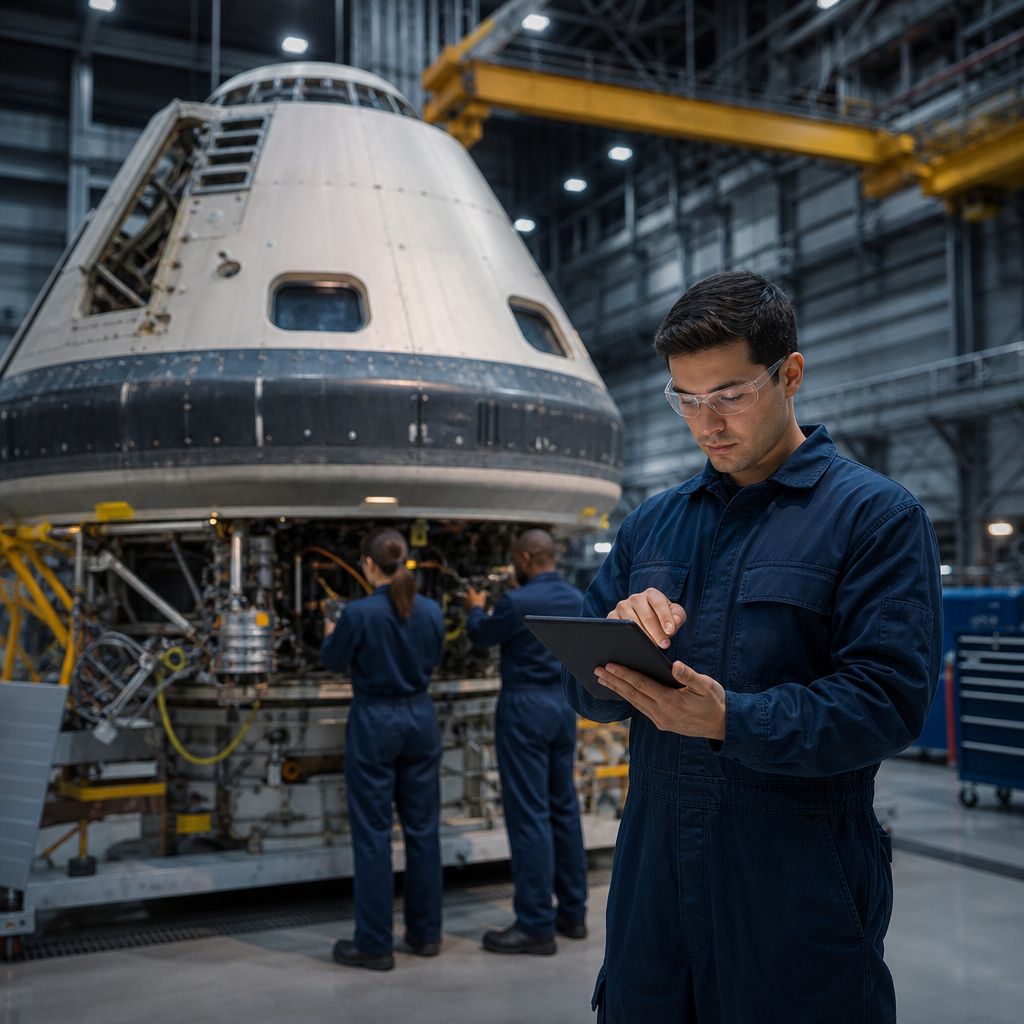
Yeager propulsion systems are a class of advanced rocket engines that utilize innovative combustion and propulsion techniques to achieve superior performance compared to traditional chemical rockets. These systems are often employed in both government and commercial space missions, where reliability and efficiency are paramount. The core principle behind Yeager technology involves the use of high-energy propellants and optimized combustion chambers to maximize thrust while minimizing fuel consumption.
The development of Yeager propulsion systems has been influenced by several key factors, including the increasing demand for cost-effective space travel and the need for more powerful engines capable of supporting heavy payloads. These systems are designed to operate under extreme conditions, such as the vacuum of space and the high temperatures generated during combustion. The materials used in the construction of Yeager engines are typically advanced composites and alloys that can withstand these harsh environments.
One of the primary advantages of Yeager propulsion systems is their ability to achieve higher specific impulse values, which is a measure of the efficiency of a rocket engine. This means that Yeager engines can produce more thrust per unit of propellant consumed, making them ideal for long-duration space missions. Additionally, these systems are often equipped with sophisticated control mechanisms that allow for precise adjustments in thrust and direction, enhancing the overall maneuverability of spacecraft.
The design and operation of Yeager propulsion systems are governed by complex physical principles, including fluid dynamics, thermodynamics, and combustion chemistry. Engineers and scientists involved in the development of these systems must have a deep understanding of these principles to optimize performance and ensure safety. The integration of Yeager technology into spacecraft requires careful planning and testing to ensure compatibility with other onboard systems and to meet mission-specific requirements.
Technical Details
Yeager propulsion systems typically consist of several key components, including the combustion chamber, nozzle, fuel injectors, and control systems. The combustion chamber is where the propellant is ignited, and the resulting high-pressure gases are expelled through the nozzle to generate thrust. The design of the combustion chamber and nozzle is critical to the performance of the engine, as it directly affects the efficiency and stability of the combustion process.
The fuel injectors in Yeager engines are responsible for delivering the propellant into the combustion chamber at the precise rate and mixture required for optimal combustion. These injectors are often designed with advanced materials and precision engineering to ensure consistent performance under varying operating conditions. The control systems in Yeager engines are responsible for monitoring and adjusting the engine's parameters in real-time to maintain stability and efficiency.
One of the most significant technical challenges in the development of Yeager propulsion systems is achieving stable combustion under extreme conditions. This requires careful selection of propellants and the design of combustion chambers that can withstand high temperatures and pressures. Additionally, the integration of advanced control systems is essential to ensure the safe and efficient operation of these engines in space.
Application Area
- Satellite Deployment: Yeager propulsion systems are widely used in the deployment of satellites into orbit. Their high efficiency and reliability make them ideal for missions requiring precise orbital insertion and station-keeping.
- Interplanetary Missions: These systems are also employed in interplanetary missions, where their ability to provide sustained thrust over long durations is crucial for navigating the vast distances between planets.
Well Known Examples
- SpaceX Merlin Engine: The Merlin engine, developed by SpaceX, is a well-known example of a Yeager propulsion system. It is used in the Falcon 9 and Falcon Heavy rockets and has demonstrated exceptional performance in both commercial and government missions.
- Blue Origin BE-4 Engine: The BE-4 engine, developed by Blue Origin, is another notable example of a Yeager propulsion system. It is designed to power the New Glenn rocket and represents a significant advancement in rocket engine technology.
Risks and Challenges
- Material Limitations: The extreme conditions under which Yeager engines operate can lead to material degradation and failure. Ensuring the durability and reliability of these systems is a significant challenge for engineers.
- Cost and Complexity: The development and implementation of Yeager propulsion systems are highly complex and costly. This can limit their accessibility to smaller organizations and emerging space nations.
Similar Terms
- Chemical Rocket: A traditional rocket engine that uses chemical propellants to generate thrust. While similar to Yeager systems, chemical rockets typically have lower specific impulse values and are less efficient.
- Electric Propulsion: A type of propulsion system that uses electric power to accelerate propellant to high velocities. Electric propulsion systems are often more efficient than chemical rockets but provide lower thrust.
Summary
Yeager propulsion systems represent a significant advancement in the field of aerospace engineering, offering superior performance and efficiency compared to traditional rocket engines. These systems are crucial for a wide range of space missions, from satellite deployment to interplanetary exploration. Despite the challenges associated with their development and operation, Yeager technology continues to play a pivotal role in the future of space travel and exploration.
--
Related Articles to the term 'Yeager' | |
| 'Air-augmented rocket' | ■■■■■■■■■ |
| Air-augmented rocket: An air-augmented rocket is a hybrid Propulsion system that combines features of . . . Read More | |
| 'Boosting' | ■■■■■■■■ |
| Boosting refers to the use of additional propulsion to increase the speed or altitude of a spacecraft . . . Read More | |
| 'Ramjet' | ■■■■■■■■ |
| Ramjet in the Space industry context refers to a type of air-breathing jet engine that uses the aircraft\'s . . . Read More | |
| 'Propulsion' at maritime-glossary.com | ■■■■■■■■ |
| Propulsion in the maritime context refers to the mechanisms and systems used to generate thrust to move . . . Read More | |
| 'Dynamic Balancing' at quality-database.eu | ■■■■■■■■ |
| The concept of Dynamic Balancing refers to a precision engineering process essential for optimizing the . . . Read More | |
| 'Automotive Manufacturing' at quality-database.eu | ■■■■■■■■ |
| The Automotive Manufacturing sector represents one of the most complex and highly regulated industries . . . Read More | |
| 'Water' | ■■■■■■■ |
| Water plays a number of important roles in the aerospace industry. Some examples include: . . . . . . Read More | |
| 'Cluster' | ■■■■■■■ |
| A cluster refers to a group or arrangement of objects or systems that are connected or related in some . . . Read More | |
| 'Booster' | ■■■■■■■ |
| A booster refers to a rocket or Propulsion system designed to provide the initial thrust needed to lift . . . Read More | |
| 'Turbopump' | ■■■■■■■ |
| Turbopump: A turbopump is a mechanical device that is used to deliver a high-pressure fluid, such as . . . Read More | |
Do you have more interesting information, examples? Send us a new or updated description !
If you sent more than 600 words, which we can publish, we will -if you allow us - sign your article with your name!